

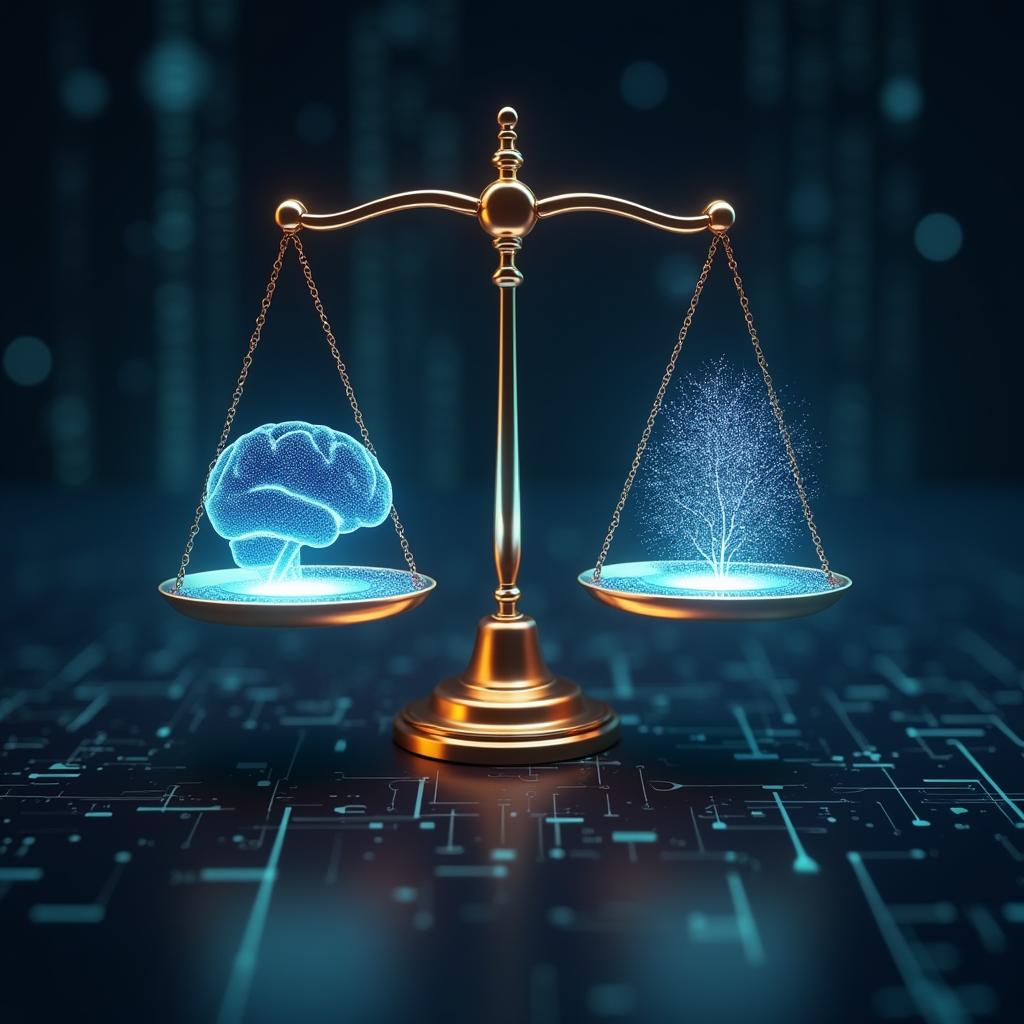

Artificial Intelligence (AI) is advancing at a breakneck pace, reshaping industries and redefining possibilities. As we step into 2025, understanding the emerging trends is crucial for staying ahead in this dynamic landscape. In this article, we'll explore the top 12 AI trends predicted by experts, offering insights into what's driving these developments and how they might impact various sectors.
1. Agentic AI: The Rise of Autonomous Agents
In 2025, AI agents capable of performing tasks independently are expected to become more prevalent. These autonomous systems can handle activities such as scheduling meetings, making purchases, and managing workflows without human intervention. This advancement is anticipated to significantly enhance productivity across various industries.
2. Multimodal AI: Integrating Multiple Data Types
AI models that can process and generate text, images, audio, and video are breaking new ground.
This capability allows for more natural and comprehensive interactions, enhancing applications in healthcare, content creation, and customer service.
For instance, virtual assistants may soon create presentations or edit videos based on voice commands. Tech Startups
3. Open-Source AI: Democratizing Access.
The open-source movement in AI is gaining momentum, making advanced models more accessible to researchers and developers.
This trend fosters innovation and collaboration, leading to more diverse and robust AI applications.
Projects like DeepSeek exemplify this shift, offering powerful AI tools to a broader audience. Tech Startups
4. AI in Healthcare: Revolutionizing Patient Care.
AI is transforming healthcare by enabling personalized treatment plans, predictive diagnostics, and efficient patient management.
Machine learning algorithms analyze vast datasets to identify patterns, assisting in early disease detection and tailored therapies.
This leads to improved patient outcomes and streamlined healthcare processes.
5. AI-Driven Robotics: Enhancing Automation.
The integration of AI into robotics is leading to more adaptable and intelligent machines.
These robots can perform complex tasks in manufacturing, logistics, and even domestic settings, increasing efficiency and reducing human labor in repetitive or hazardous environments.
6. Ethical AI: Addressing Moral Implications.
As AI systems become more pervasive, addressing ethical considerations is paramount.
This includes ensuring fairness, transparency, and accountability in AI algorithms to prevent biases and unintended consequences.
Organizations are increasingly focusing on developing ethical frameworks to guide AI deployment.
7. AI in Finance: Transforming Financial Services.
AI is revolutionizing the financial sector by enhancing fraud detection, automating trading, and providing personalized banking experiences.
Advanced algorithms analyze transaction patterns to identify anomalies, while robo-advisors offer investment advice tailored to individual needs.
8. Natural Language Processing (NLP): Improving Human-Computer Interaction.
Advancements in NLP enable machines to understand and generate human language more effectively.
This leads to improved chatbots, virtual assistants, and language translation services, facilitating more natural and intuitive interactions between humans and machines.
9. AI in Education: Personalized Learning Experiences.
AI is personalizing education by adapting learning materials to individual student needs.
Intelligent tutoring systems assess student performance in real-time, providing customized feedback and resources to enhance learning outcomes.
10. AI and Cybersecurity: Strengthening Defense Mechanisms.
In cybersecurity, AI systems detect and respond to threats more swiftly by analyzing network traffic patterns and identifying anomalies.
This proactive approach enhances the ability to prevent data breaches and protect sensitive information.
11. AI and Quantum Computing: Pushing Computational Boundaries
AI technologies are optimizing agriculture through precision farming, crop monitoring, and yield prediction.
Drones equipped with AI analyze soil health, while predictive analytics assist farmers in making data-driven decisions, leading to increased productivity and sustainability.
12. AI in Transportation: Advancing Autonomous Vehicles
The transportation sector is witnessing significant advancements with AI-powered autonomous vehicles.
These systems enhance safety, reduce traffic congestion, and offer efficient logistics solutions through intelligent navigation and real-time data analysis.